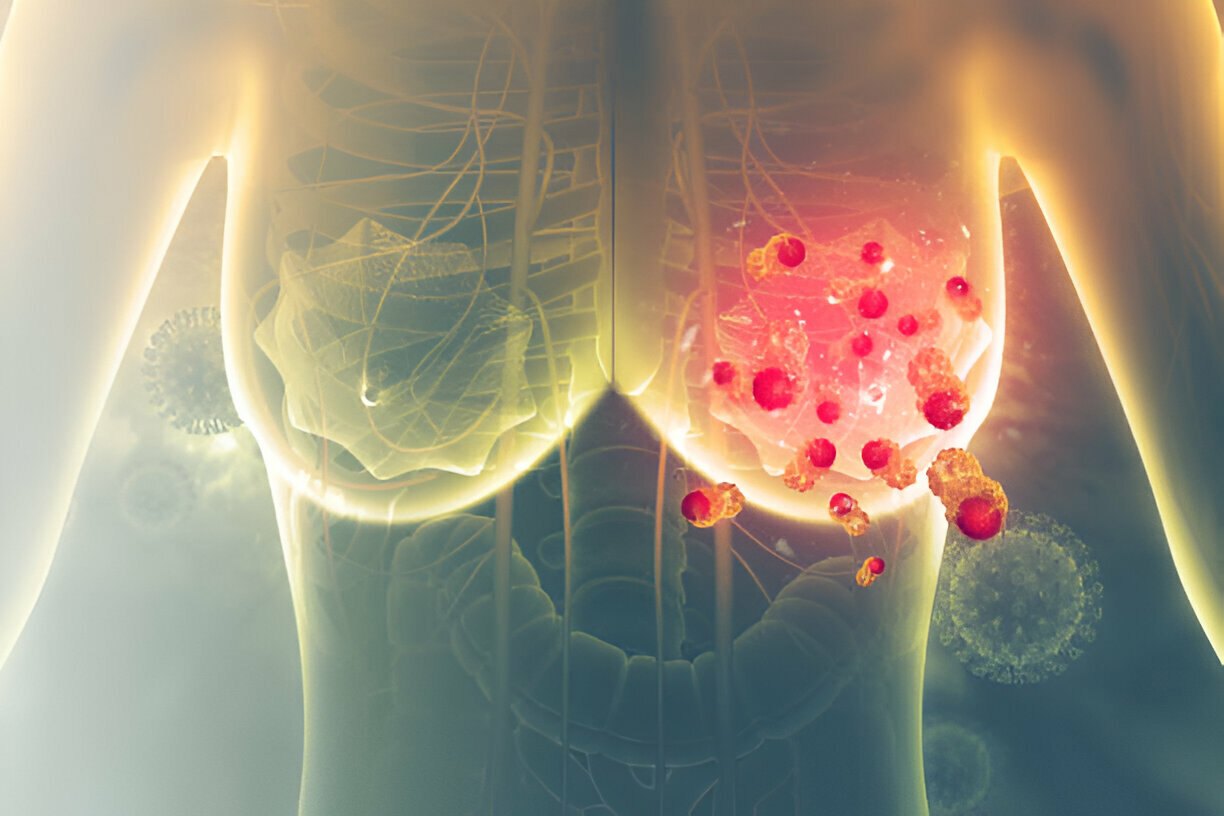
Breast disease encompasses a wide range of conditions that affect the breast tissues, ranging from benign (non-cancerous) disorders to breast cancer. Understanding the spectrum of breast disease is crucial for early detection, appropriate management, and prevention.
These changes can make breasts feel lumpy or ropy and are often associated with breast pain and tenderness that fluctuates with the menstrual cycle.
Fluid-filled sacs within the breast, which can be felt as lumps.
Solid, benign tumors made up of glandular and fibrous breast tissue.
Small, wart-like growths in the lining of the mammary duct near the nipple, which can sometimes cause discharge.
Inflammation of breast tissue often associated with infection or clogged milk ducts during breastfeeding.
A non-invasive cancer where cells inside the ducts have changed to cancer cells but they haven't spread to the surrounding breast tissue.
The most common type of breast cancer, starting in the milk ducts and then invading nearby tissue.
Cancer that begins in the lobules and spreads to nearby tissues.
Management depends on the specific breast condition, ranging from benign disorders to breast cancer.
Breast cancer treatment is determined according to the type, location and spread of the disease.