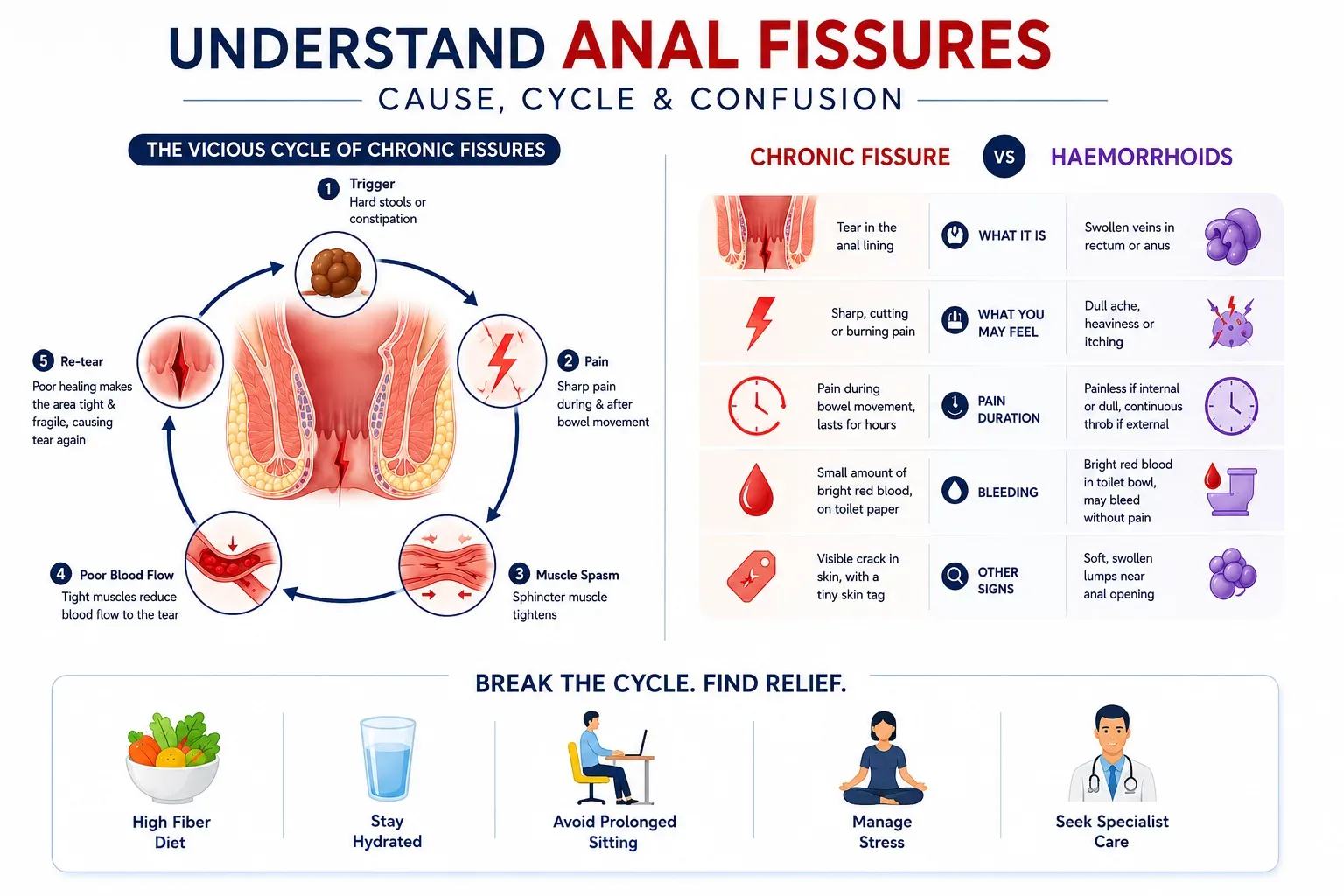
An anal fissure is a small tear or cut in the lining of the anus, which can cause pain, bleeding, and discomfort during bowel movements. Fissures are common and can be acute (short-term) or chronic (long-term). They often develop as a result of passing hard or large stools, but other factors such as diarrhea, childbirth, or inflammatory bowel disease can also contribute to their formation.
A short-term anal fissure.
A long-term anal fissure.
Increasing fiber intake and drinking plenty of fluids to soften stools.
Ointments or creams containing hydrocortisone or nitroglycerin to relax the anal sphincter and promote healing.
Warm-water baths to soothe the area and reduce inflammation.
Botulinum toxin injection to relax the anal sphincter muscles.
Surgical cutting of the anal sphincter muscle to reduce pressure and promote healing.
Surgical removal of the fissure tissue.